Artificial intelligence has stopped being a “nice to have” for marketers. Heading into 2026, it has become the operating infrastructure behind how brands find customers, talk to them, and keep them coming back. Here’s a look at the shifts defining the industry this year — and what they mean for your marketing strategy.
1. Search Is Being Rewritten by AI
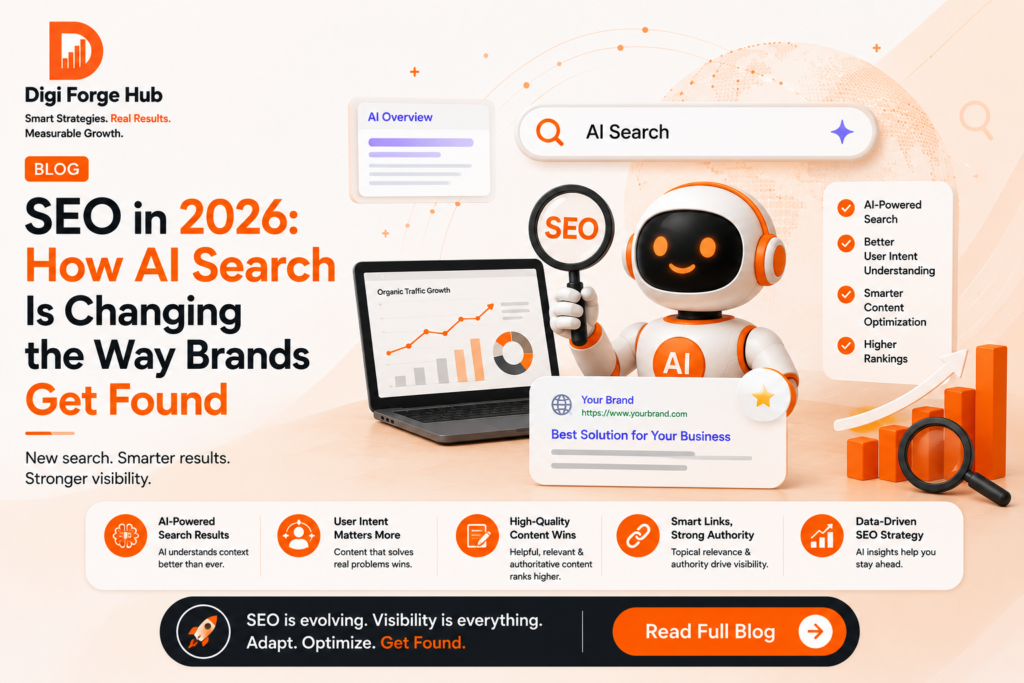
Traditional SEO — chasing keywords and rankings — is no longer the center of online discoverability. Search engines now generate AI-powered summaries directly in response to queries, which means marketers have to think beyond blue links. This has given rise to Generative Engine Optimization (GEO): structuring and refining content so that AI-driven search systems and large language models can find, understand, and surface it.
What this means for you: content needs to be written for both humans and AI systems — clear structure, direct answers, and credible sourcing all help your brand show up when an AI assistant summarizes an answer instead of listing ten links.
2. Personalization Has Become the Baseline
Personalized marketing used to be a differentiator. In 2026, it’s simply expected. AI now allows brands to move past broad demographic targeting and instead segment audiences by actual behavior — what people click, buy, abandon, and return to.
That means:
- Smarter customer segmentation using predictive analytics
- Campaigns that adapt in real time to how a person is engaging
- Messaging that reaches the right customer with the right offer at the right moment
3. Content Creation Has Sped Up — But Strategy Still Belongs to Humans
Generative AI now handles a huge share of first-draft content: ad copy, product descriptions, email sequences, social posts, and more. This frees marketing teams from repetitive production work, but it hasn’t replaced the need for human judgment. Brands that win in 2026 aren’t necessarily the ones using the most AI tools — they’re the ones pairing AI-driven efficiency with strong human strategy, keeping people focused on positioning, messaging, and genuine customer understanding while AI handles execution at scale.
4. Chatbots and Virtual Assistants Feel More Human
Customer-facing AI has taken a big step forward. Chatbots and virtual assistants now provide support, recommend products, and guide customers across websites and messaging apps around the clock. For businesses handling high volumes of inquiries, this translates into faster response times, lower support costs, and more consistent customer satisfaction — without requiring a proportional increase in headcount.
5. Advertising Optimizes Itself in Real Time
AI is increasingly running entire ad campaigns end-to-end — optimizing creative, budget allocation, and targeting continuously rather than waiting for a human to review weekly reports. Ad platforms can now reallocate spend within minutes based on live performance, and email systems can adjust subject lines mid-campaign based on open rates. The days of “set it and check back next week” are fading fast.
6. Voice and Visual Search Are Growing Channels
As more customers use voice assistants and image-based search tools to find products, brands are optimizing content specifically for voice queries and visual discovery — not just typed keywords. This is pushing marketers to think about how their content sounds and looks to an AI system, not just how it reads.
7. Privacy and Compliance Are Built Into the Tools
As AI marketing tools mature, more of them now come with built-in compliance features — managing consent, anonymizing data, and protecting customer privacy by design. With data regulations shifting regularly, working with AI platforms and partners who stay current on compliance has become part of a responsible marketing strategy, not an afterthought.
8. The Marketer’s Role Is Shifting, Not Disappearing
Perhaps the biggest change isn’t a tool — it’s the job itself. Instead of focusing purely on execution, marketers are increasingly expected to interpret AI-generated insights, guide strategy, and make judgment calls that automation still can’t replicate. Skills like data literacy, prompt writing, and the ability to translate AI output into brand-consistent strategy are becoming as valuable as traditional creative skills.
Key Takeaways for Your Business
- Optimize for AI search, not just Google rankings. GEO is the new SEO.
- Treat personalization as table stakes, not a bonus feature.
- Let AI handle repetitive execution — content drafts, ad bidding, reporting — so your team can focus on strategy and creative direction.
- Invest in conversational AI if you haven’t already; customers now expect instant, competent responses.
- Keep a human in the loop. The brands seeing the best results combine AI efficiency with real strategic thinking, not AI alone.
AI hasn’t replaced marketing — it’s changed what marketers spend their time on. The teams that adapt fastest, blending automation with genuine strategy and creativity, are the ones set up to win in 2026 and beyond.